
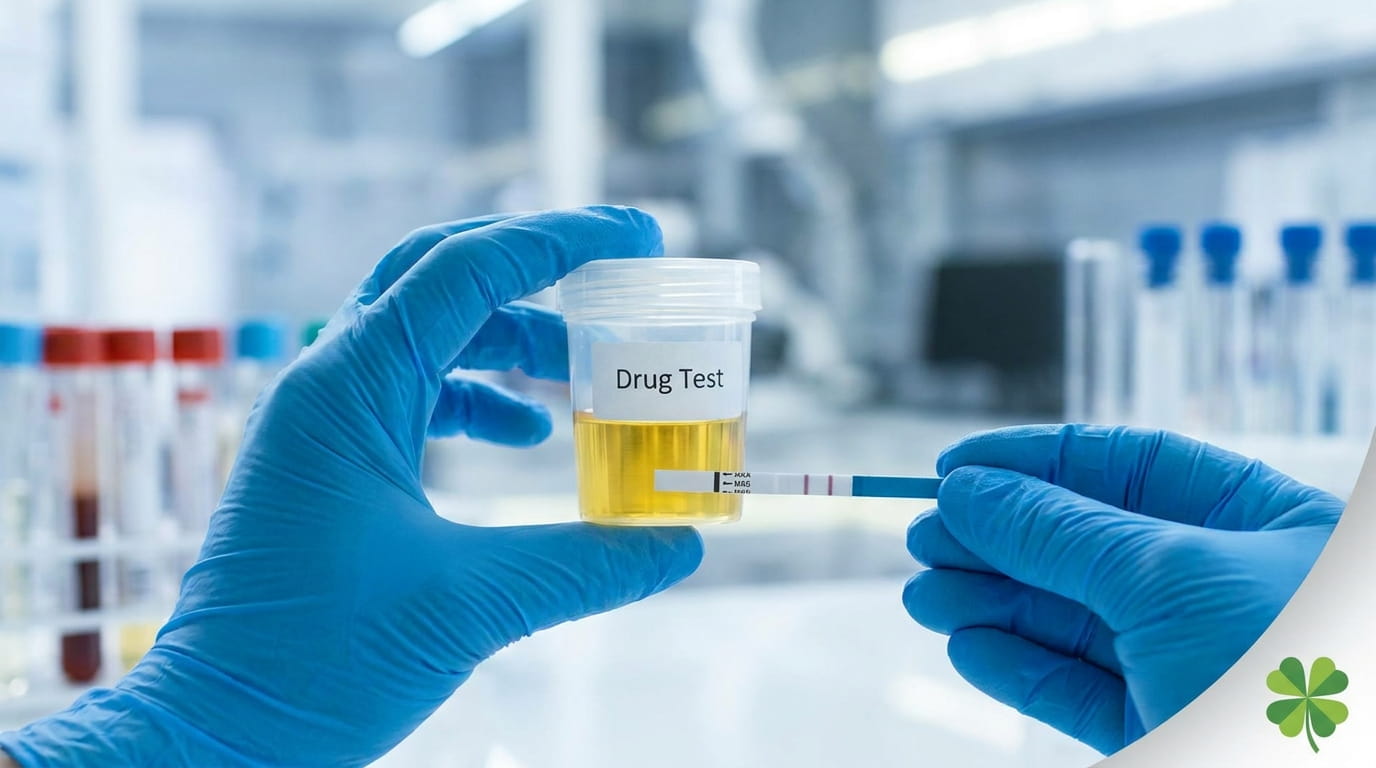
Modern urine screenings are built to verify specimen integrity before they ever trust a negative drug result. When a chemical additive like Urine Luck enters a sample, laboratory analyzers look directly for the chemical and physical footprints left behind.
- 90–100°F — Accepted Temperature
- 4.5–9.0 — Normal pH Range
- 50 mcg/mL — Chromium VI Cutoff
Why Additives Trigger
Most people assume a drug screen only searches for substances like THC or opiates. In reality, certified facilities run every specimen through automated Specimen Validity Testing (SVT). These built-in safeguards exist specifically because in-sample additives became common in the 1990s.
Rather than hunting for a brand name, SVT checks whether a liquid behaves like unaltered human urine. Any chemical strong enough to break down drug metabolites also tends to disturb a sample’s baseline chemistry.
Chemical Markers
Labs catch Urine Luck primarily through targeted reagent checks that measure reactive compounds inside the cup.
- Oxidants & Chromium VI: Older Urine Luck batches relied on pyridinium chlorochromate (PCC) to degrade THC metabolites. Labs screen directly for chromium VI and general oxidizing activity at concentrations as low as 50 mcg/mL.
- pH Shifts: Human urine normally measures between 4.5 and 9.0. Concentrated additives—especially in low-volume samples under two ounces—can push acidity into the invalid zone (4.0–4.5 or 9.0–11.0) or straight into adulterated territory (below 4.0 or 11.0 and above).
- Nitrites & Interference: Colorimetric strips also flag elevated nitrites (invalid at 200–500 mcg/mL; adulterated at 500 mcg/mL or higher) alongside unusual chemical reactions that interfere with enzyme immunoassays.
Physical Clues
Detection often starts before a sample ever reaches a laboratory bench. Collection staff check the specimen cup’s temperature strip within four minutes of handoff to verify a 90°F to 100°F reading. They also log visible anomalies—such as sudden foaming, cloudiness, odd tinting, or sharp chemical odors—right on the custody form.
At the lab, analyzers also confirm creatinine (normally 20 mg/dL or higher) and specific gravity (typically 1.0030 to 1.0200). While additives do not dilute urine the way heavy water intake does, reactive chemicals can skew colorimetric creatinine readings and route the sample for manual review.
Instant vs. Lab
Test setting changes how Urine Luck interacts with a screen. Rapid clinic cups and on-site dip cards read a specimen within minutes, whereas reformulated two-vial Urine Luck kits require 45 to 90 minutes to react inside the liquid. On an instant test, the strip finishes reading before the additive completes its chemical process. On a lab-bound test, the extra transit time allows the reaction to occur, but also puts the sample through full automated SVT.
Lab Flags
When validity testing detects chemical tampering or out-of-range chemistry, the laboratory reports one of three non-negative findings to the testing administrator:
Adulterated means the lab confirmed a foreign chemical substance—such as chromium VI, excess nitrites, or oxidants—or recorded an extreme pH outside human limits. Invalid means unexplained chemical interference or borderline readings prevented a reliable drug analysis. Substituted applies when creatinine falls below 2 mg/dL alongside abnormal density, showing the specimen does not match human urine.
Depending on workplace or testing rules, any of these outcomes can lead to an observed recollection or count as a refusal to test.
Quick Notes
- Additives do not erase detection windows; review timelines in Drug Detection Times.
- For effectiveness background, read Does Urine Luck Work?.
- Comparing additives with premixed liquids? See Urine Luck vs. Quick Fix.
- Explore broader screening formats on our Urine Drug Testing and False Positives pages.
Verify Before Testing
Testing your own baseline at home removes guesswork before collection day. Check your current status quickly with a CLIA-waived 13-Panel Urine Test Dip Card with FEN 1ng, or avoid chemical urine additives altogether by reviewing the pre-balanced Ultra Pure 4 oz Synthetic Urine Kit.